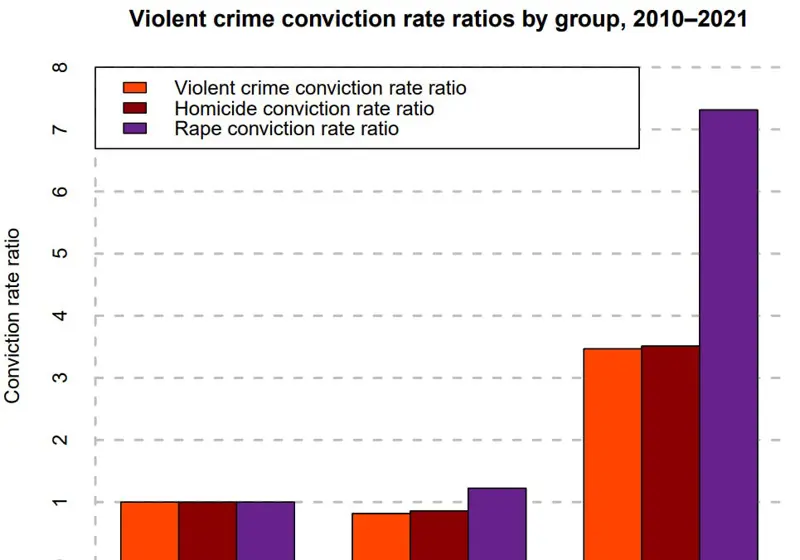
Summary: In 2018, native Danes had a positive net contribution to the budget of DKK +41 billion, while immigrants and their descendants had a negative net contribution of DKK -24 billion. Immigrants from Western countries and their descendants had an overall small positive net contribution to the budget, while MENAPT immigrants and other non-Western groups had an overall negative net contribution. Age has a strong impact on budget balance: children and the elderly generate a net cost to the budget, and working-age people must pay more to offset it. Standardizing the fiscal contribution by age significantly alters the estimates for each group, since immigrants are disproportionately young adults compared to those born in Denmark. When broken down by origin (without adjusting for age), immigrants from Western countries have an overall positive net fiscal contribution, while immigrants from MENAPT countries have an overall negative net fiscal contribution. The author argues that adjusting each country's fiscal data by age would systematically lower the figures, causing the values for MENAPT countries to fall further and bringing the values for Western countries closer to zero. In 2021, immigrants and their descendants accounted for 14% of Denmark's population, but 29% of convictions for violent crimes, roughly 2.5 times the conviction rate among those born in Denmark. Immigrants from Western countries and their descendants accounted for 5.0% of the population, but only 3.8% of violent crime convictions, a lower rate of violent crime convictions than among the native-born. Immigrants and descendants of non-Western immigrants accounted for 8.9% of the population, but 25.4% of violent crime convictions, a much higher violent crime conviction rate than for the native-born. Between 2010 and 2021, immigrants from Western countries had about 20% lower conviction rates for violent crimes than those born in Denmark, while non-Western immigrants had about 3.5 times the rate of those born in Denmark. By country of origin (2010-2021, unadjusted), some immigrant groups had a violent crime conviction rate less than half that of those born in Denmark, and some exceeded it by more than 8 times, with immigrants from Japan having no violent crime convictions during the period. The risk of being convicted of violent crime peaks in the late teenage years and is highest among young men, and immigrants are more concentrated in these high-risk age groups than Danish-born individuals. Adjusting violent crime conviction rates by country of origin for age and gender reduces the rate ratios by about 20-25%, but hardly changes the order of the groups with the highest or lowest rates. After adjusting for age and gender, the immigrant groups with the highest rates still have a violent crime conviction rate more than six times that of Danes, so most of the differences remain after accounting for demographic factors. The cited official Danish analysis concludes that higher crime rates among non-Western groups compared to Western groups are not due to age, socioeconomic status, family education or family income.
Comments
Be the first to comment!