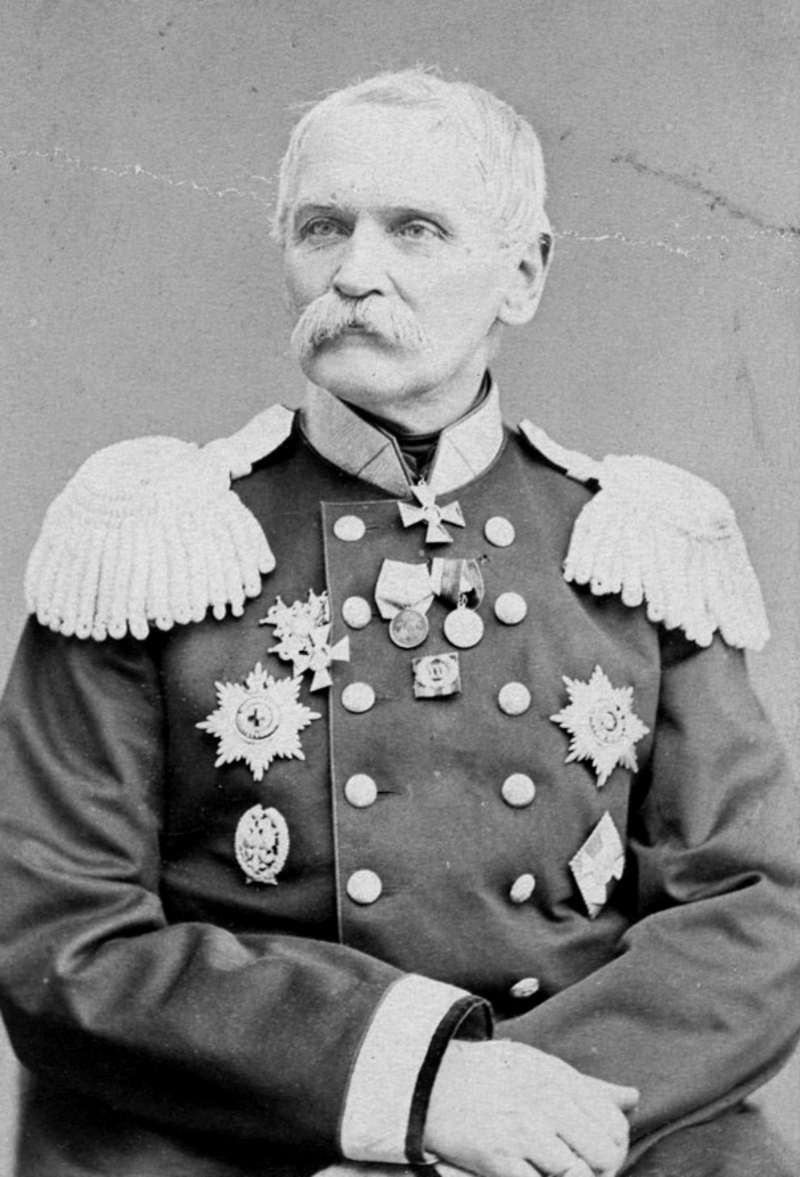
Stanislav Kierbedz (1810-1899) was a Polish engineer, a major general in the army of Tsarist Russia and a pioneer in the field of truss bridges, known for building key bridges over the Neva and Vistula rivers. Early life and education Born on March 10, 1810, in Novy Dvor near Panevezys (then in the Russian Empire) to a noble family of the Slepowron coat of arms, Kierbedz studied at Piarist schools and the Imperial University of Vilnius, before graduating with honors from the Institute of Transportation Engineers in St. Petersburg in 1831. From 1831 to 1849, he taught construction and mechanics at St. Petersburg institutions, traveling throughout Europe (Germany, France, England) to study engineering advances. Major engineering projects Kierbedz designed and built the Blagoveshchensky Bridge over the Neva River in St. Petersburg (1842-1850), a 342-meter-long iron structure with seven fixed spans and one drawbridge, overcoming deep water, ice and tidal waves. Czar Nicholas I personally approved the project and, upon its completion, promoted Kierbedzia to the rank of Major General. He built Russia's first truss bridge over the Luga River (1853-1857) and supervised the construction of the Alexandria (Kierbedz) Bridge over the Vistula River in Warsaw (1859-1864), using innovative caissons as foundations. He later served as deputy director of the St. Petersburg-Warsaw Railway and construction manager of the Kronstadt port. Later career and legacy Appointed a secret counselor in 1881, Kierbedz retired in 1891, settled in Warsaw, bought the Oltarzew estate to support Polish artisans through land plots, and donated his technical library to the Lviv Polytechnic. He received numerous Russian orders, such as the White Eagle (1871), and was honored with scholarships and awards named after him. Kierbedz died on April 19, 1899, and was buried in Powązki Cemetery in Warsaw.
Comments
Be the first to comment!