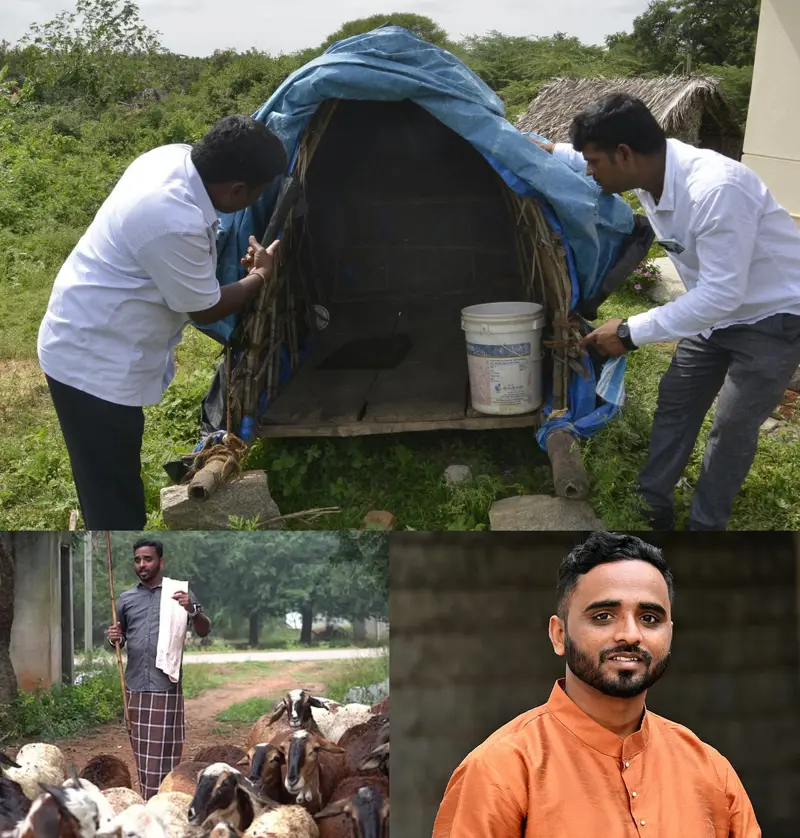
After the birth of a child, the mother with the baby is left unattended in a small shed behind the village for seven to thirty days, after which she is taken back home. In the event of her illness, no one from the caste will care for her, but a woman from the Nayak (Beda) tribe is obligated to do so. Mr. Stuart goes on to write that "the social status of the Gollas is quite high, as they can freely procreate with the Kāpu, Kamma and Balija castes, and the Brahmins (almost White people) can accept buttermilk from their hands." As for the Gollas of Mysore, I conclude that "there are two main divisions in this caste, namely Uru (village) and Kadu (forest). They do not marry among themselves or eat together. The Gollas of Kadu are said to have originally come from northern India and are still a nomadic tribe, living in thatched huts outside villages." Marriages between them also take place in a temporary shed erected outside the village, with accompanying ceremonies lasting five days, when the newlyweds are brought back to the village. Golla are allowed to marry as many wives as they wish, and sexual maturity is not an obstacle to marriage. They eat meat and drink spirits. A wife cannot be divorced except for adultery. Their women do not wear a corset (ravike), which is usually worn by women in the country. Nor do they remove or break the glass bracelets worn on their wrists, as is done in other castes. Widows, however, are not allowed to remarry. Only 98 have returned to gotras, the main ones being Yādava, Karadi, Atreya and Amswasa. The first two are actually subsects, while Atreya is the name of a rishi brahmin. Yadava, or descendant of King Yadu, from whom Krishna descended, also appears as a synonym for Idaiyan, the great Tamil class of herdsmen.
Comments
Be the first to comment!